Avril Lavigne will release a new greatest hits album on June 21st.
Read More “Avril Lavigne Announces Greatest Hits Album”Avril Lavigne Announces Greatest Hits Album














Avril Lavigne will release a new greatest hits album on June 21st.
Read More “Avril Lavigne Announces Greatest Hits Album”
The Starting Line have added a third New Jersey show.
Read More “The Starting Line Add Third Jersey Show”
House of Protection (featuring former Fever 333 members Aric Improta and Stephen Harrison) have released the new song “It’s Supposed to Hurt.”
Read More “House of Protection – “It’s Supposed to Hurt””
Today I’m so excited to share with everyone the latest music video from Montreal-based pop artist, Léolo. On this song that is filled with such raw emotion, “Feel The World” embraces the springtime with an optimistic outlook. When speaking on the single, Léolo shared, “The idea for this song came to me while I was taking a walk on the beach of a small island in the St. Lawrence River. It was the first time I had gotten out of the city since the beginning of the pandemic, so the need to sing about opening oneself up to the world and the urge to celebrate was quite legitimate at that point!” If you’re enjoying the latest track, please consider streaming this artist’s music here. I was also able to catch up with the talented pop star below.
Read More “Léolo – “Feel The World” (Video Premiere)”
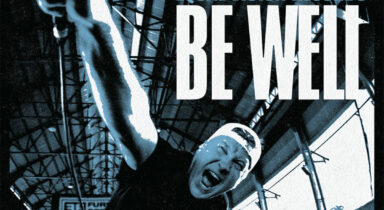
The latest two-track single from Baltimore punk/hardcore band, Be Well, is an electric-charged artistic statement that demands to be taken seriously. Led by fearless frontman Brian McTernan, “A Tap I Can’t Turn Off” and “Without A Compass” rock with an immediacy to them that put a firm focus on why this band is so dynamic. Starting with “A Tap I Can’t Turn Off,” the heavy opening riffing sets the tone for the lyrics of, “There is an overwhelming sense of doubt / That’s spent a lifetime occupying my mind / The things that I’ve done to block it out / Have corroded the rest of what’s left over time,” that showcase McTernan’s conflict within his own mind. The track explodes out of the gate with a rare sense of urgency, and ends with the pain in the lyrics of, “But I still lack confidence / And sometimes I feel like shit.”
Read More “Be Well – “A Tap I Can’t Turn Off””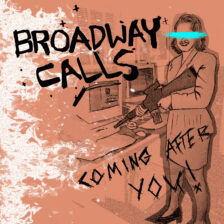
Music has a funny way of finding us, doesn’t it? So when I got wind of the Oregon punk rock band, Broadway Calls, and their latest EP, Coming After You, I was taken back by just how good the music pouring out the speakers was. This slick, 4-song EP was recently pressed on a 7″ vinyl via Red Scare Industries, and is a pleasing blend of great punk rock riffing paired with sing-a-long moments that are sure to make you feel rejuvenated about the current punk scene. The set was produced by Scott Goodrich, and puts a bright spotlight on the band’s songwriting improvements. Broadway Calls are Coming After You, and you should embrace it.
Read More “Broadway Calls – Coming After You”
Today I’m so excited to bring everyone the new music video from British post-punk band Marcel Wave, called “Stop/Continue.” Band member Maike Hale-Jones shared, “Stop/Continue is the product of a youth spent in a decaying post-industrial town. The carcasses of derelict mills looming over the landscape a stark reminder of how the mighty always fall and how nature carries on regardless.” The song comes from the band’s upcoming LP Something Looming, that will be released on June 14th via Feel It Records/Upset the Rhythm. If you’re enjoying the latest single, you can pre-order the band’s new LP here.
Read More “Marcel Wave – “Stop/Continue” (Video Premiere)”
Oso Oso has shared the new song “All My Love.”
Read More “Oso Oso – “All My Love””
Chaser have shared a video for “Fault Lines.”
Read More “Chaser – “Fault Lines” Video”
Stand Atlantic have released a video for “Love U Anyway.”
Read More “Stand Atlantic – “Love U Anyway” Video”
Super American have shared the new song “Manager Haircut.”
Read More “Super American – “Manager Haircut””
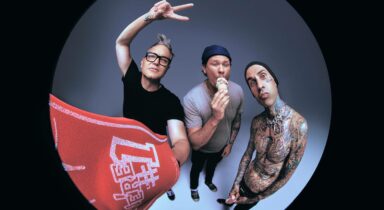
Mark Hoppus of Blink-182 posted on Instagram that he was recently tracking new music.
Read More “Mark Hoppus Tracking … Something”
Days Away have been sharing some fun images and anecdotes on Instagram.
Read More “Days Away on Instagram”
If you hit read more you can see all the releases we have in our calendar for the week. Hit the comments to access our forums and talk about what came out today, what albums you picked up, and to make mention of anything we may have missed.
Read More “Albums in Stores – May 10th, 2024”
Today I’m thrilled to bring everyone the latest single and video from rock band, Love Fiend, called “Hard Feelings.” On this 60’s stylized synth rocking jam, Love Fiend quickly establish themselves as an artist to keep a keen eye on as the year unfolds. The band shared, “What began as a conversation surrounding the meaning of the common phrase ‘no hard feelings,’ became a structured academic study into the cosmological origins of emotion. What we discovered was that before the human heart had fully developed, emotion first rested silently in the earth’s crust – petrified, rock-solid, HARD.” If you’re enjoying the latest single, please consider supporting this talented band here. I was also able to catch up with the band for a brief interview below.
Read More “Love Fiend – “Hard Feelings” (Video Premiere)”